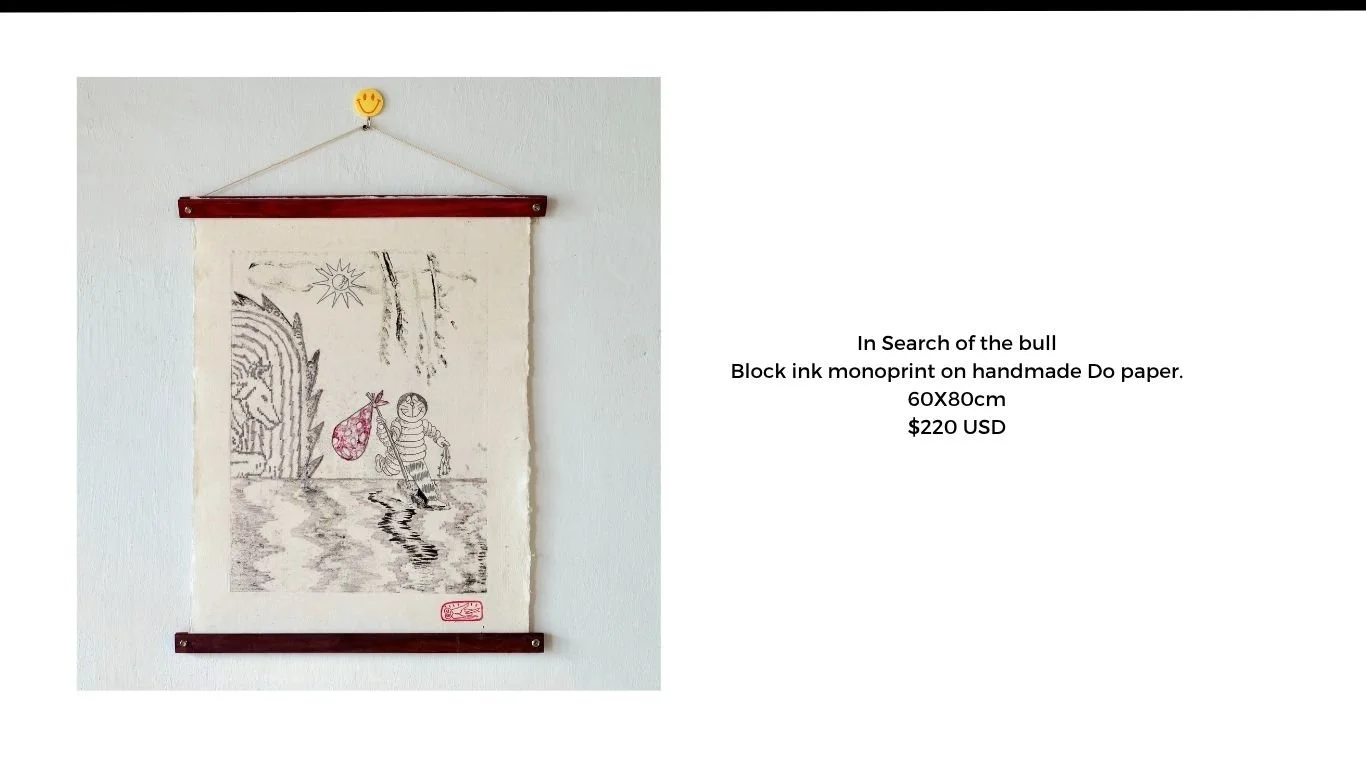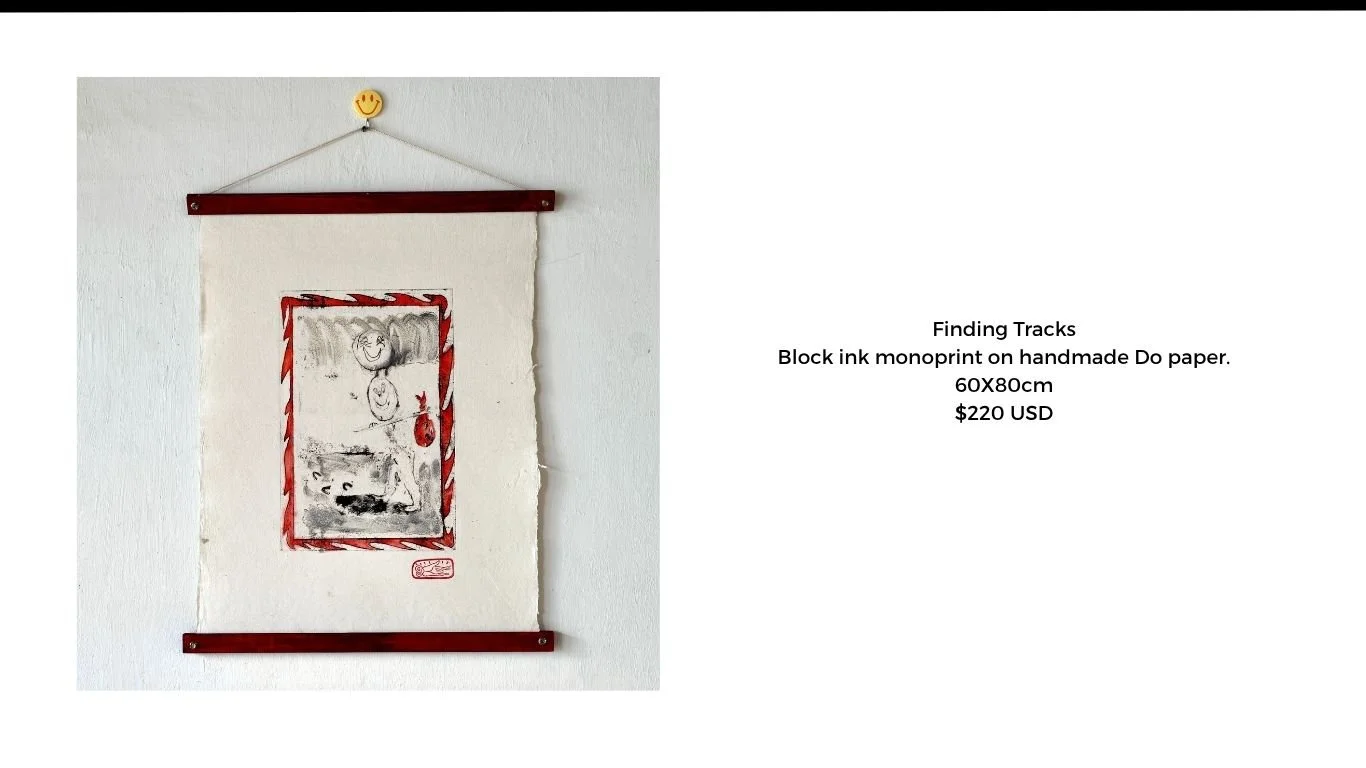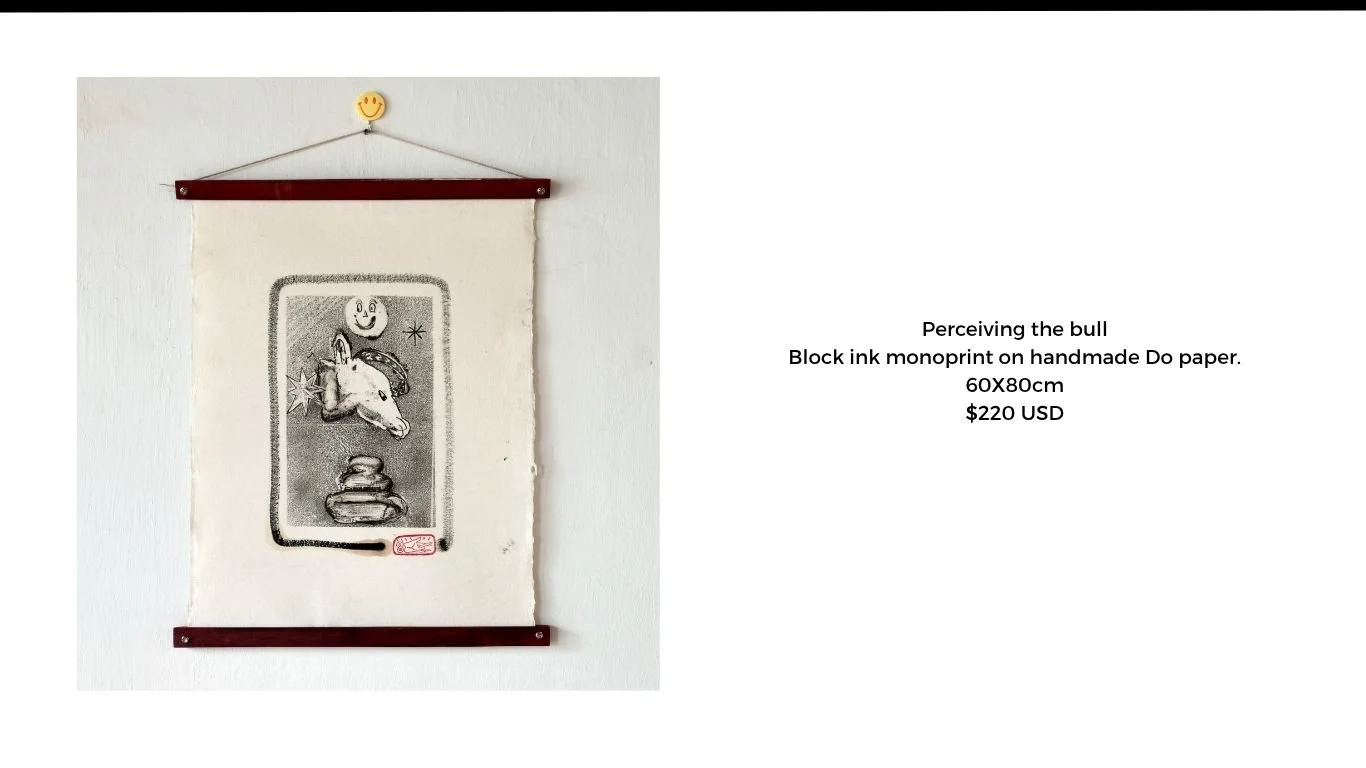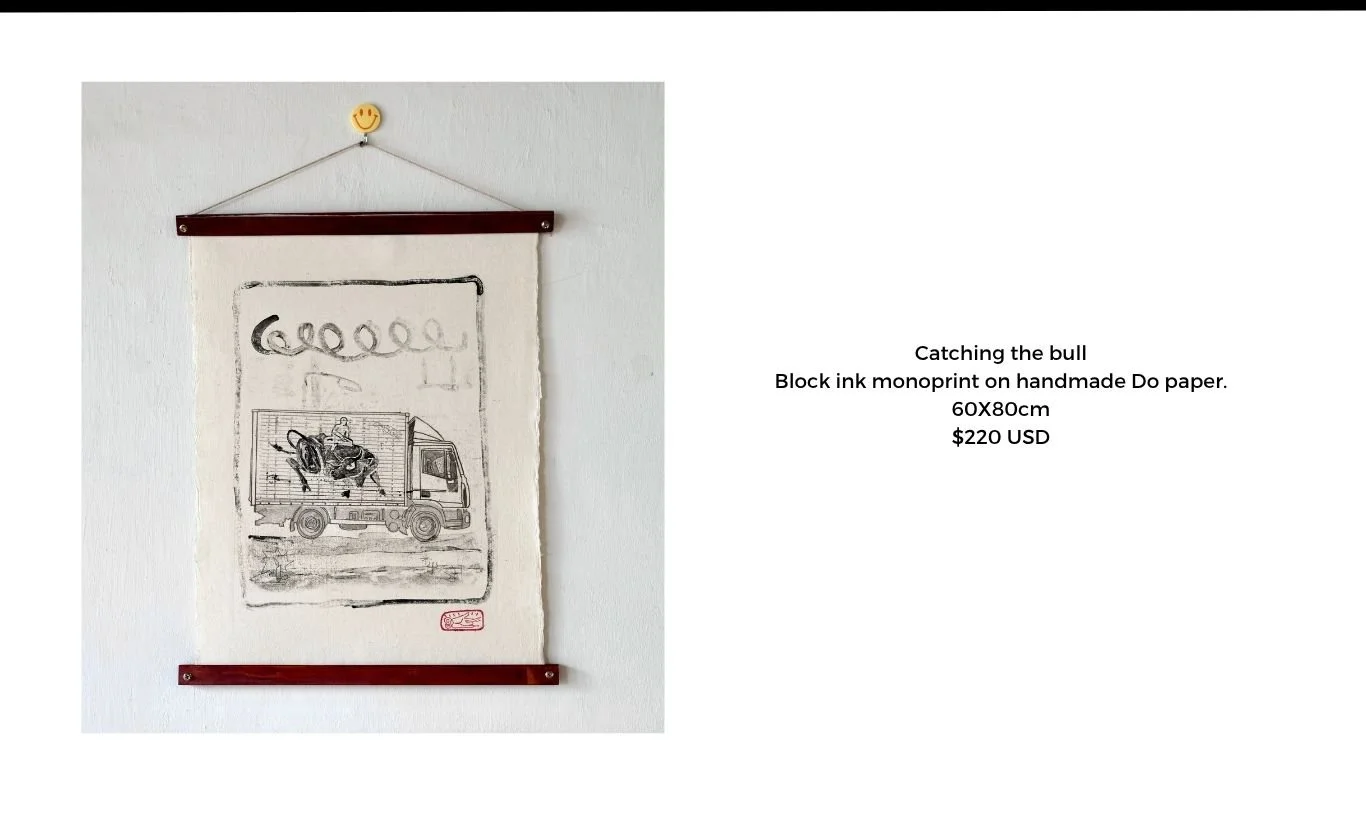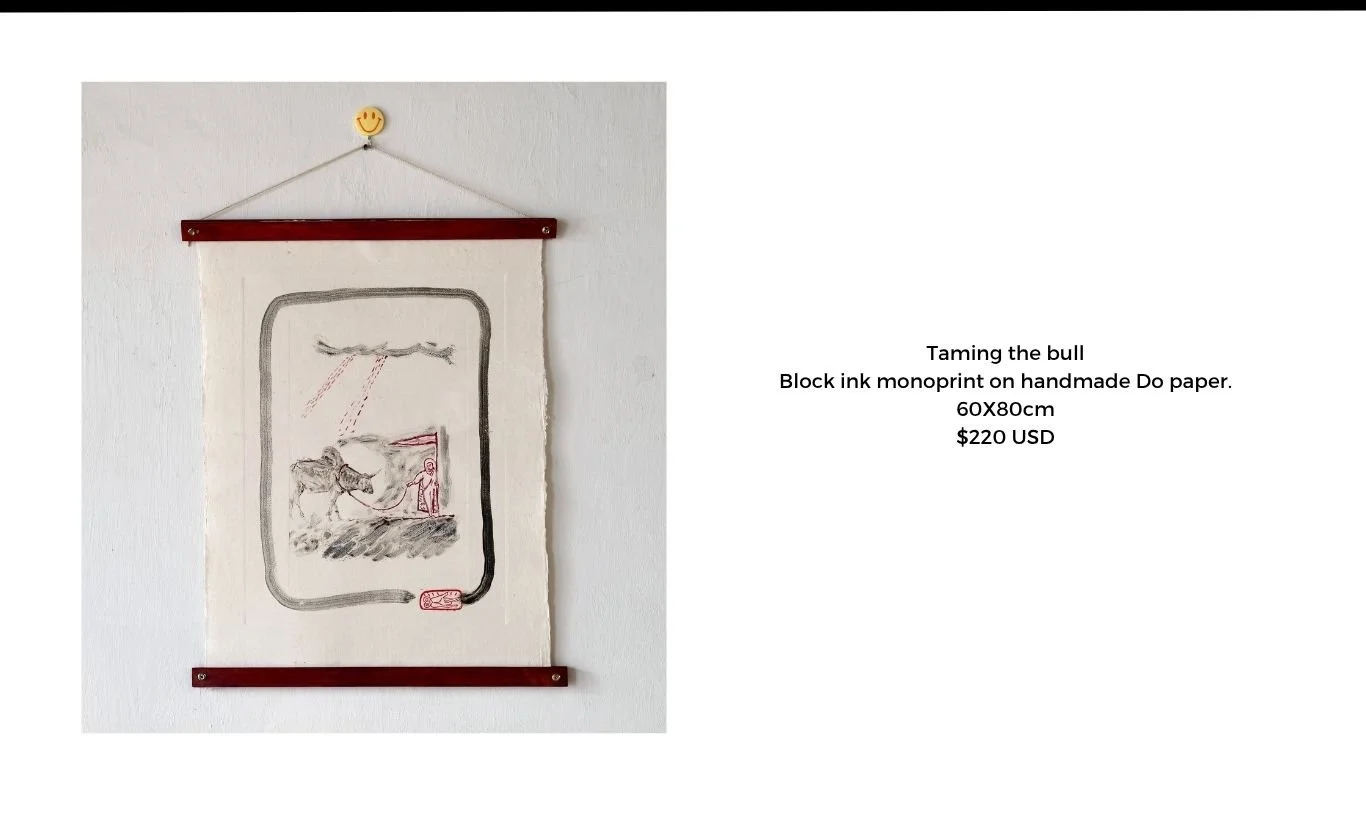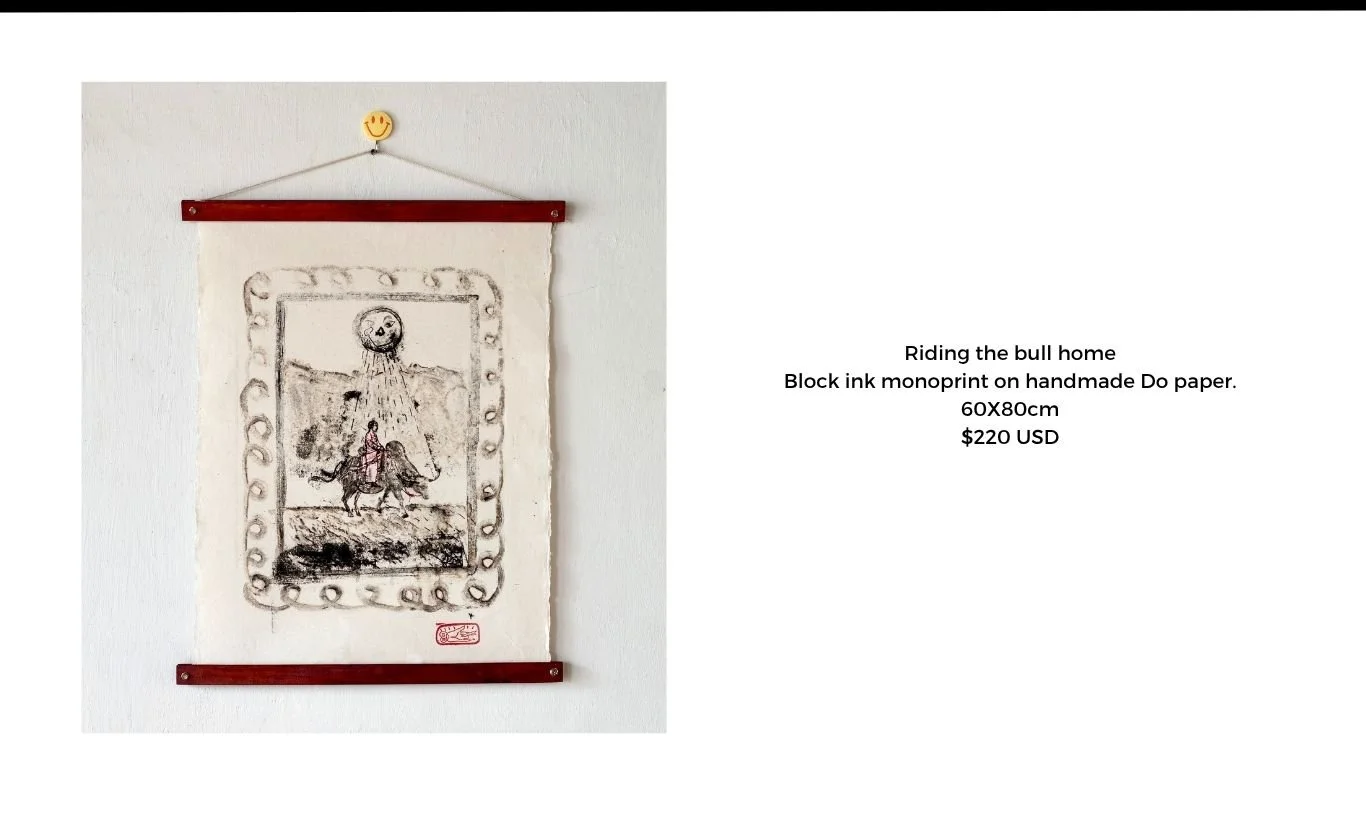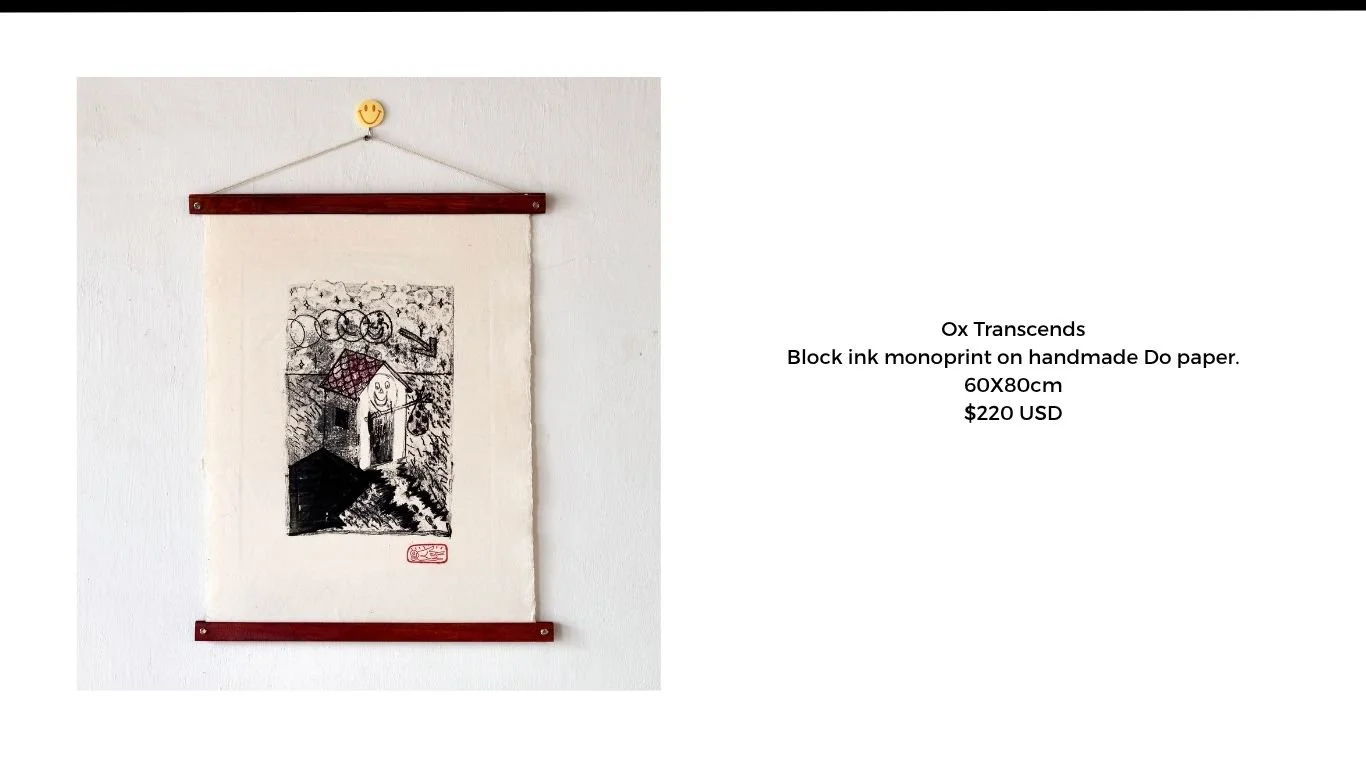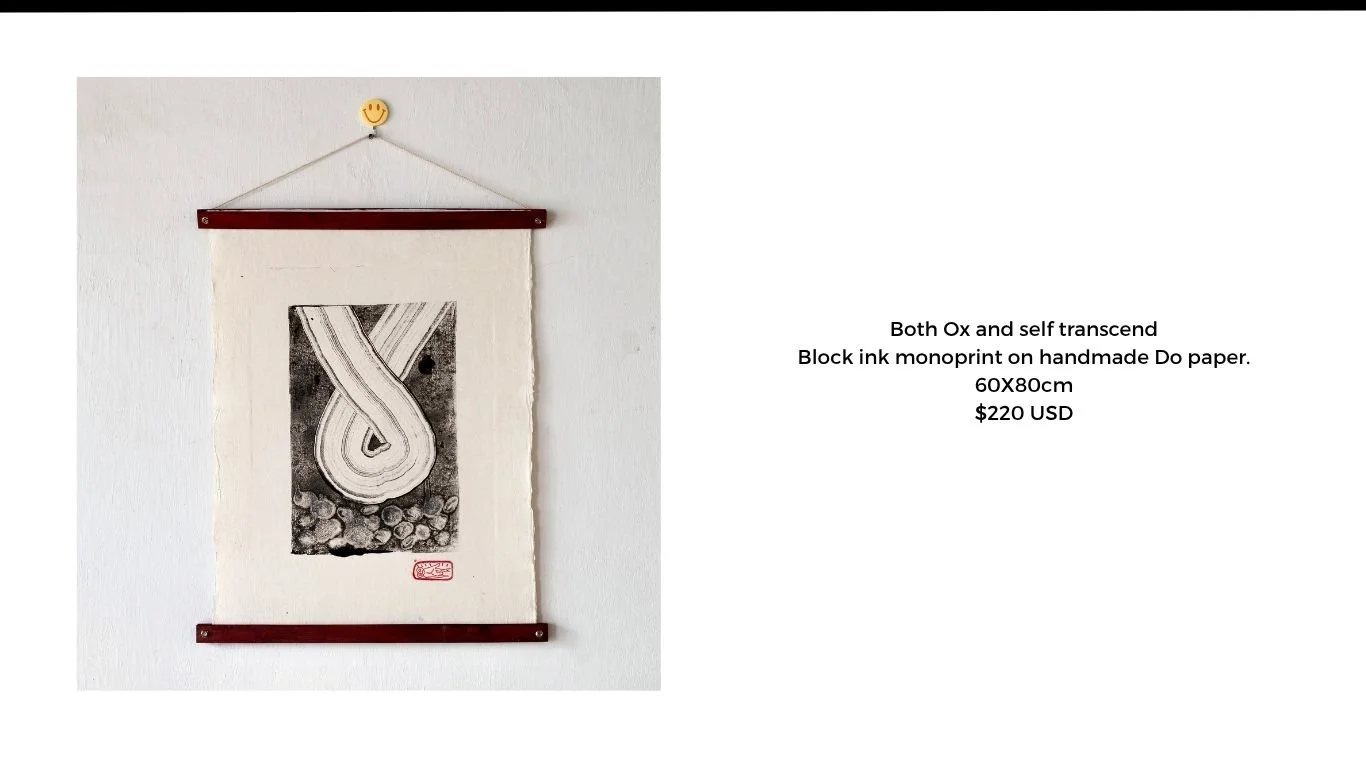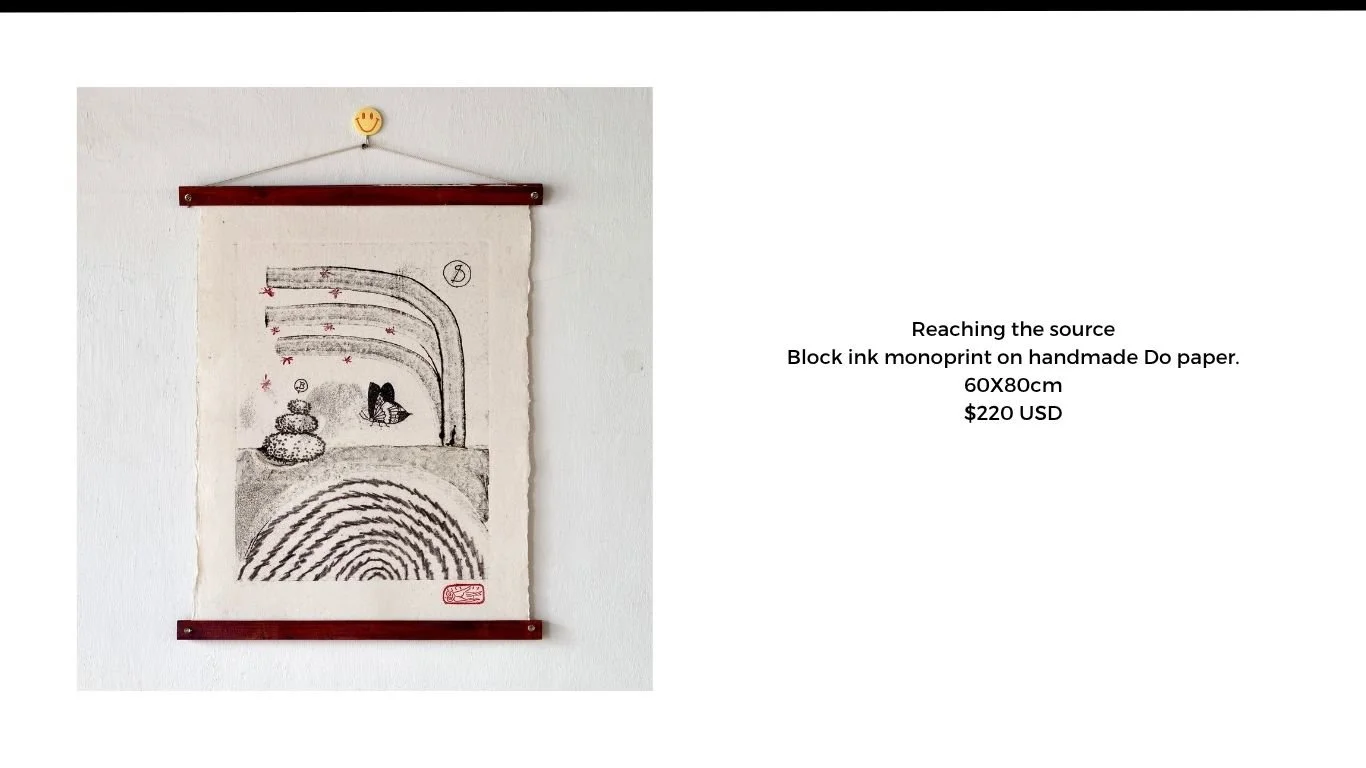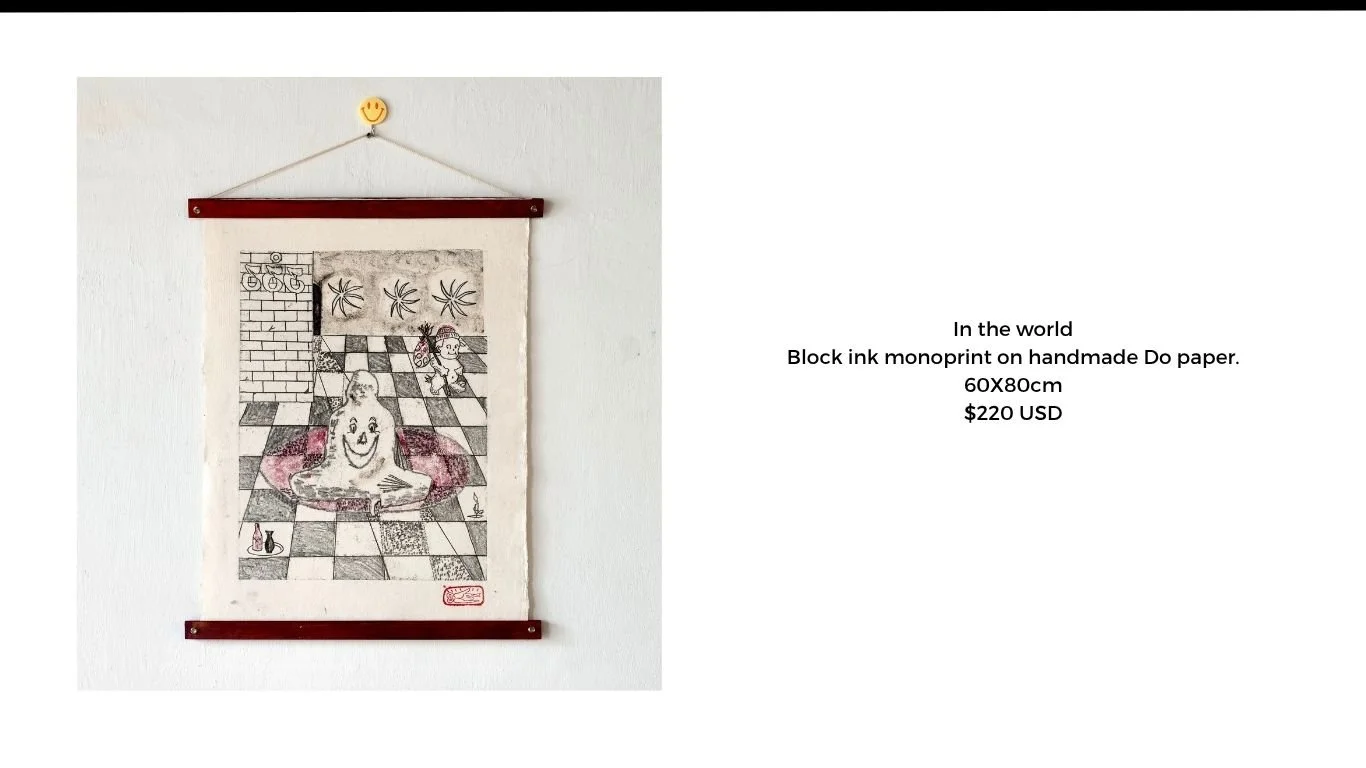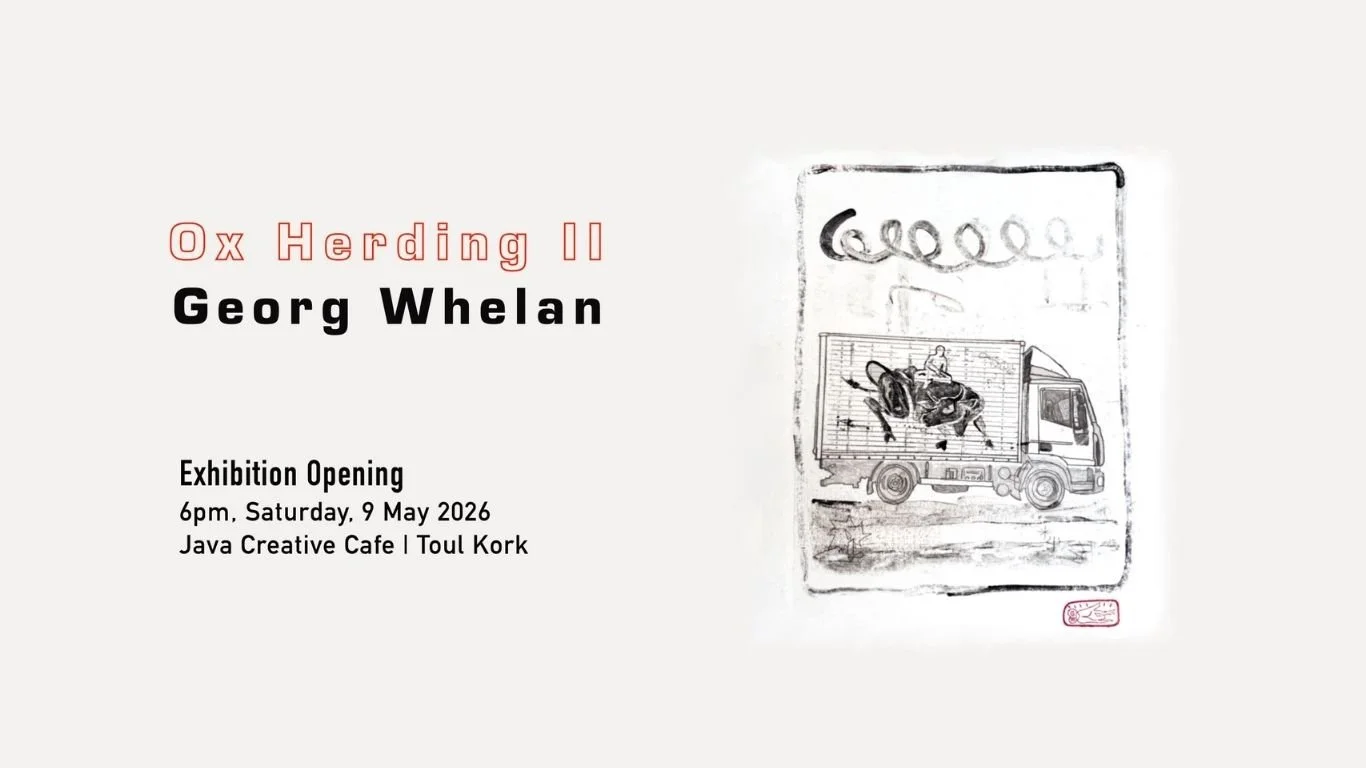
This body of work consists of a 10 panel series of mixed media mono-prints, primarily in block and sumi ink.
They are designed to act as a collaborative meditation between the artist, the translator and teacher being Paul Reps and of the tradition of the ‘Oxherding Series’, a Song-Dynasty Chinese Zen Buddhist parable of self-discovery comprised of pictures and verse.
Georg Whelan’s mono-prints are abstract interpretations of the parable rather than the recognisably traditional sumi illustrations, manifesting his own vision and spiritual affinity with the thematic threads of the series
They were made in repetition in an act that aimed to help the artist relinquish his own control and create in a more meditative state.
The design of this experiment aims to help the act of mark making to become both method and inquiry, guiding him into a sustained state of flow. Within this condition, the conventional distinctions between object (the paper and its material supports), process (the unfolding gesture of applying ink), and subject (the self as artist/maker) are first articulated and then progressively dissolved until only the process remains.
It is the hope of the artist that these prints, while existing as a fixed image and an authored statement, will also act as evidence of an immersive continuity of process—an experiential field in which ‘making’ itself assumes the qualities of meditation.
The Paul Reps translation of the "Ten Oxherding Pictures," which was featured in the 1957 book Zen Flesh, Zen Bones (co-translated with Nyogen Senzaki) was integral to this Series. It illustrates the journey to enlightenment through ten stages, portraying the ox as the true mind or buddha-nature, transitioning from seeking to ultimate integration.
Reps' Translation is outlined in key Stages:
1. The Search for the Bull: Seeking enlightenment in the "pasture of this world".
2. Discovering the Footprints: Finding signs of truth amidst the confusion.
3. Perceiving the Bull: Glimpsing one's true nature.
4. Catching the Bull: A "terrific struggle" to seize the powerful, stubborn mind.
5. Taming the Bull: Using discipline to overcome old habits.
6. Riding the Bull Home: Serene, harmonious integration.
7. The Bull Transcended: Realizing the practitioner and the bull are one.
8. Both Bull and Man Transcended: A state of empty, non-dual oneness (often represented by a circle).
9. Reaching the Source: Simply being; "The river flows tranquilly on".
10. In the World: Returning to daily life ("marketplace") to help others, "barefooted and naked of breast.
While Reps’ full translation is the primary reference point, Whelan has also chosen to make a nod to Lewis Hyde (poet and essayist) who made several translations in attempt to present the text as more open to interpretation than traditionally thought, inviting “a larger discussion of the ways we make meaning and develop theories of knowledge”, so following suit, the artist will offer their own one word translation of the parable, mirroring the Chinese tradition of one word per-character.